TL;DR: currently gates are projects from big players for big players, lets make them viable for newer players too.
so here is the current situation:
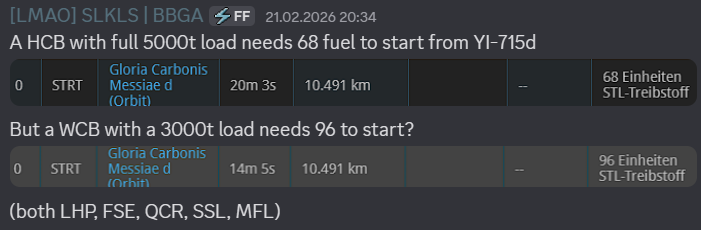
WCB: bad STL performance, good FTL performance, high gateway fee = bad²
LCB: normal STL and FTL performance, normal gateway fees = okay
VCB: good STL performance, bad FTL performance, cheap gateway fee = good²
HCB: normal STL performance, bad FTL performance, very cheap gateway fee = good³
need gateways upgraded to max volume so the max range is reduced = bad for other ships
Currently starter ships and especially WCBs rarely use gateways because they have have a bad STL performance (WCB needs to move up to 3kt cargo) and have to pay the same gateway fee as a HCB which can move 5x/10x the m³ but needs gates upgraded especially for them and with that more gates overall which is effectively paid by the smaller ships. So the ones benefitting the most are people that use HCBs (big players) and people that have enough ships to let ships run with lower SF usage (big players, but that is a different problem)
So here is my proposed solution:
making gateway fees (and VF usage) per m³ instead of per ship
With the gateway fee adjusted to m³ they get at least somewhat better as the inconsistent STL part still exists but at least it would be better. A alternative would be to have them per cargo bay (for example <=500m³, 1000m³, 2000m³, 3000m³, 5000m³) or per ship size (for example <=1500m³, <=3000m³ and >3000m³) which would add more of a political layer.
Yeah this just came up again in our gateway discussions. There’s a lot more value putting a 5k ship through a gateway than there is for a 500m3 starter ship. And we don’t want to hit new players with starter ships hard with gateway fees, especially when the savings are marginal for fast ships.
Tying this back to the idea of per faction tariffs, you could almost do this like workforce fees, with faction along one axis and ship class (I’m in favor of the per cargo bay idea) along the other
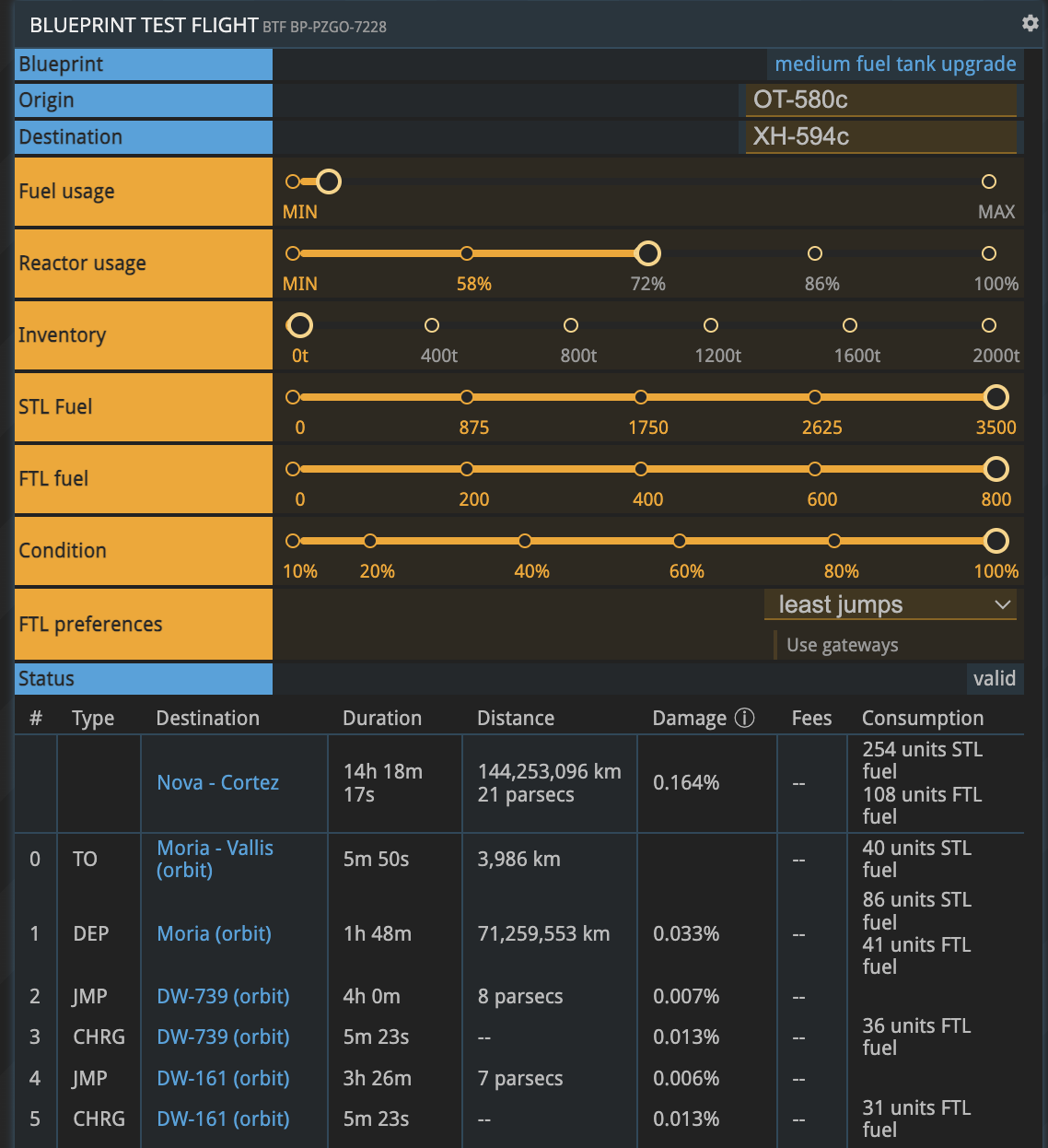
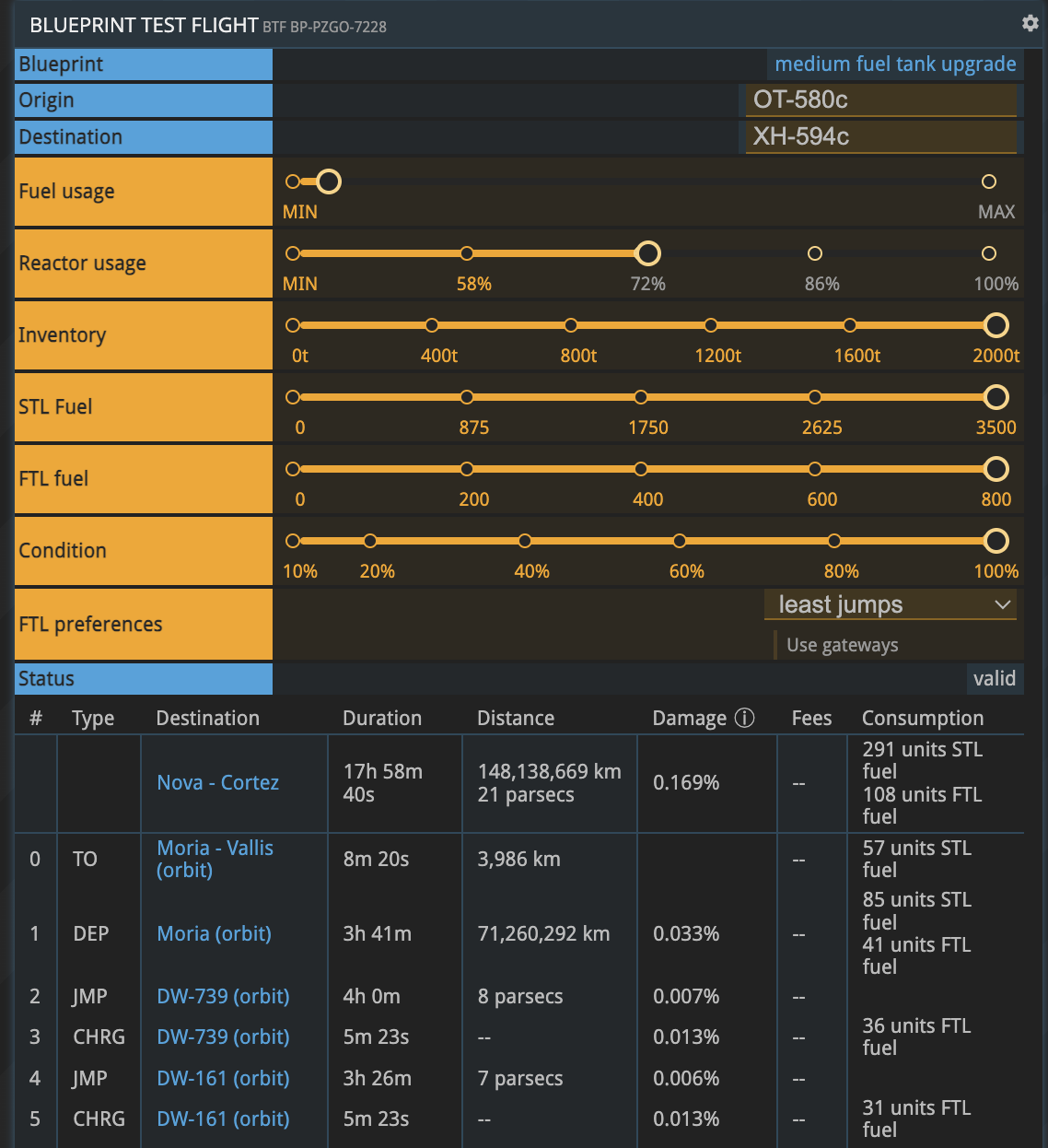
It always jumps around like there were some weather anomalies. Gravitation is without doubt, but I see on my regular routes with same cargo volume/weight that fuel varies 200-400 units per flight with same travel time.
Perhaps guys do some fuel adjustments all the time…no idea
What is weird that empty ship vs fully loaded has got almost same fuel consumption. Maybe the cargo is just a tiny fraction of ship mass…for example 2k m3/t ship.
I have a new ship project for 5k m3/t ship, and fuel rate is slightly higher than 2k m3/t ship (at least in simulation).
If cargo is just 10% of ship mass, jump gates fuel consumption is almost identical.
I didn’t use jump gates so far because they are slower, and more expensive than conventional jumping/flying.
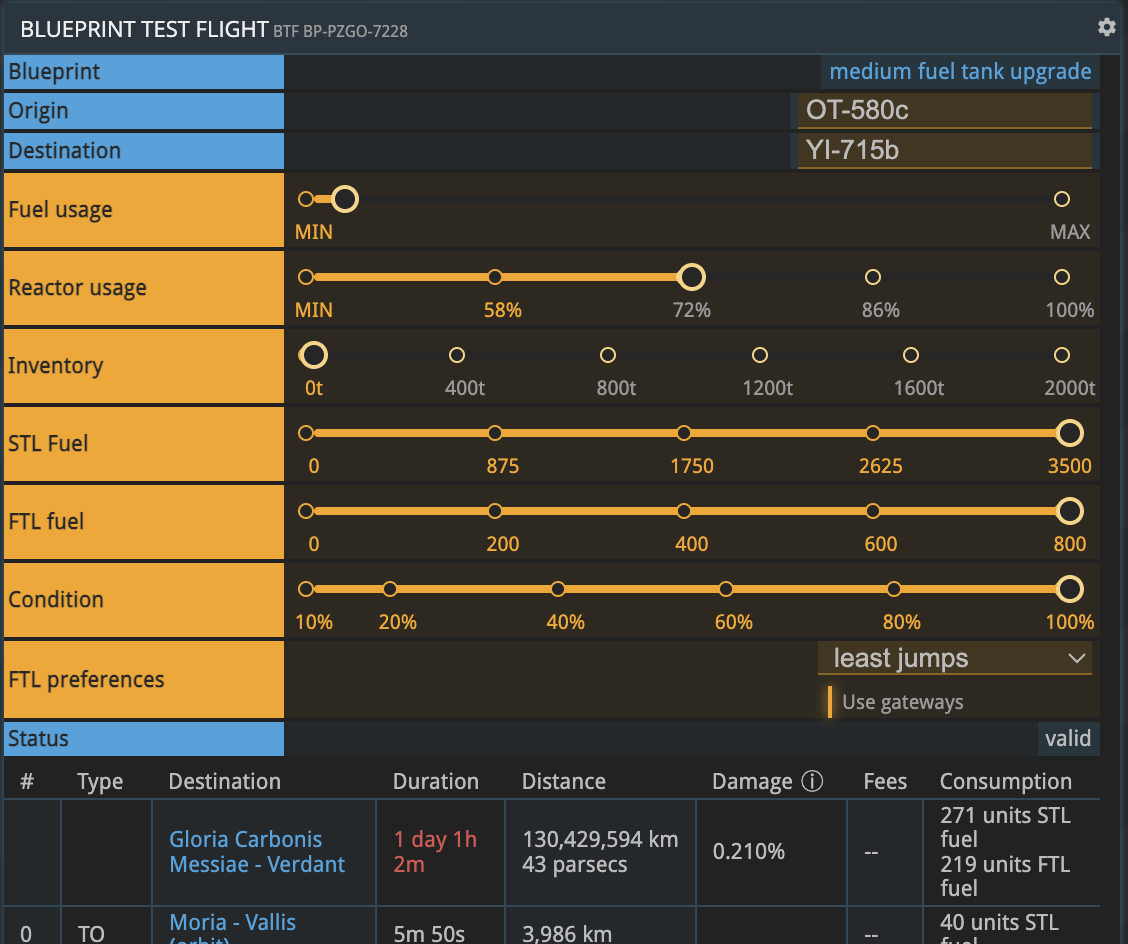
In case of Verdant, jump gate results 5+ hour longer travel from Vallis, + 1500 fee if I recall correctly.
If you are large enough, and produce own fuel…you will travel at least 30% less, and I guess 100% cheaper than jump gate.
It could be interesting if JG is located near stations, and usual jump Vallis<>Antares would be in 8h instead of 2 days in eco mode
I think you missed the topic a bit, we are talking about the gates itself.
And mainly about the FTL part, the STL travel to, from and at gates is a different topic worth its own discussion.
But maybe this helps you:
FF consumption mainly depends on volume (actually field emitters but that is more complex) so it is always the same no matter the cargo
SF consumption depends on the efficiency of the engine (FSE has a bit lower thrust than ENG but is the most efficient after HTE) and the total weight of the ship including cargo
SF consumption and STL travel time also depend on where planets are in their orbits (they move)
fuel usage ≠ flight time, to fly a bit faster you need more and more fuel
That is because the gate to Verdant isn’t build yet so the gate part to Sand that is build is inefficient.
What you make yourself isn’t free, it is fuel you could sell but use yourself so using it yourself costs you profits. (Or you could make more money with something else and buy more fuel that way.)
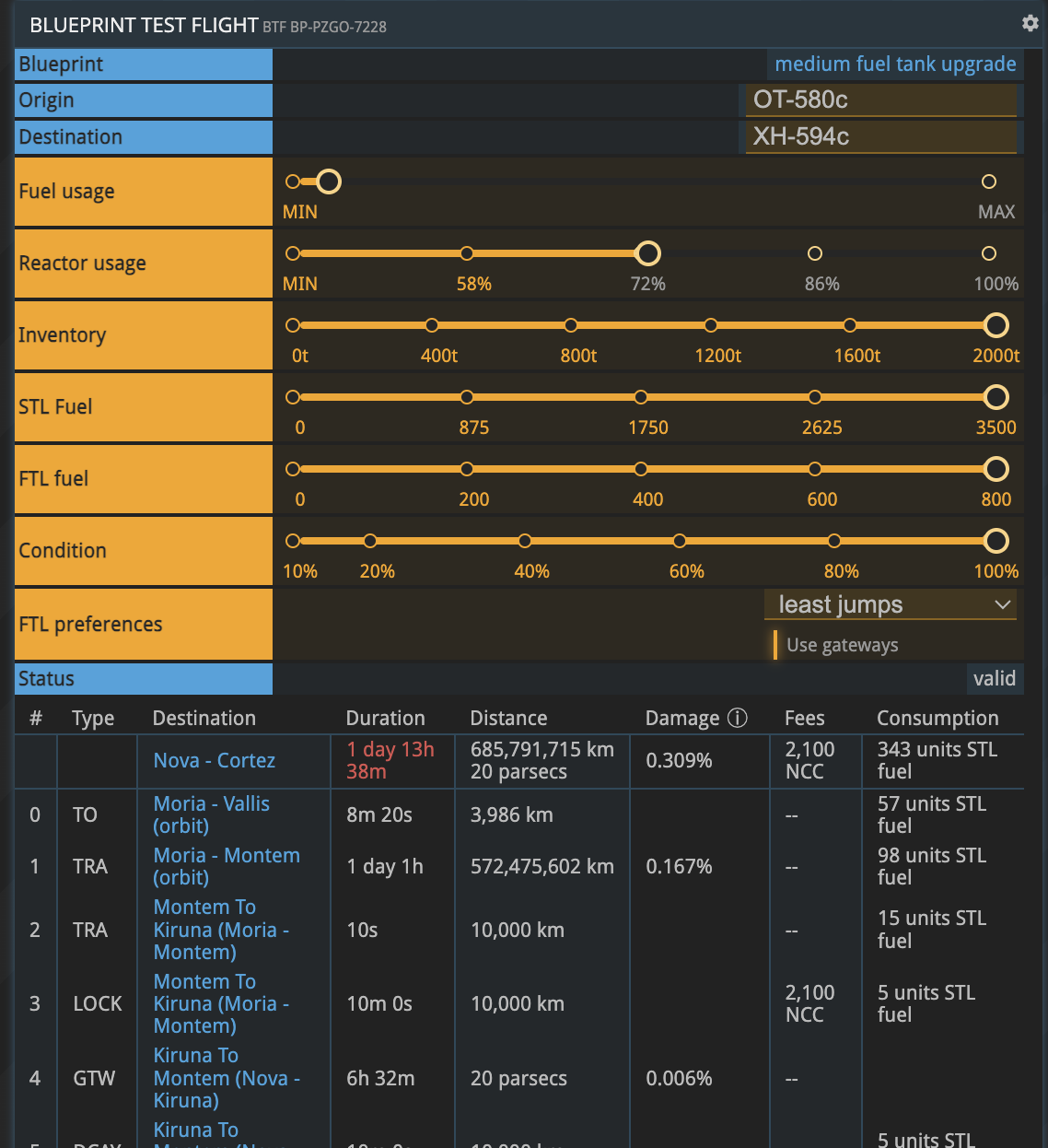
as you can see, despite cargo is double weight/mass of ship, fuel consumption is +/- 15%. In theory, if you like sim reality based on physical theories we know nowadays - fuel consumption = mass/weight * distance travel.
Let’s say we want precise “reality”, and we have jump/warp tech, and it is is based on Star Trek theory :o) - moving/jumping ship should vary based on volume/mass * distance, or time vs fuel use.
In our case, moving fully loaded ship should use 2x more fuel, or same fuel but perhaps double time.
FF is always same no matter cargo size or weight (in conventional jumps)
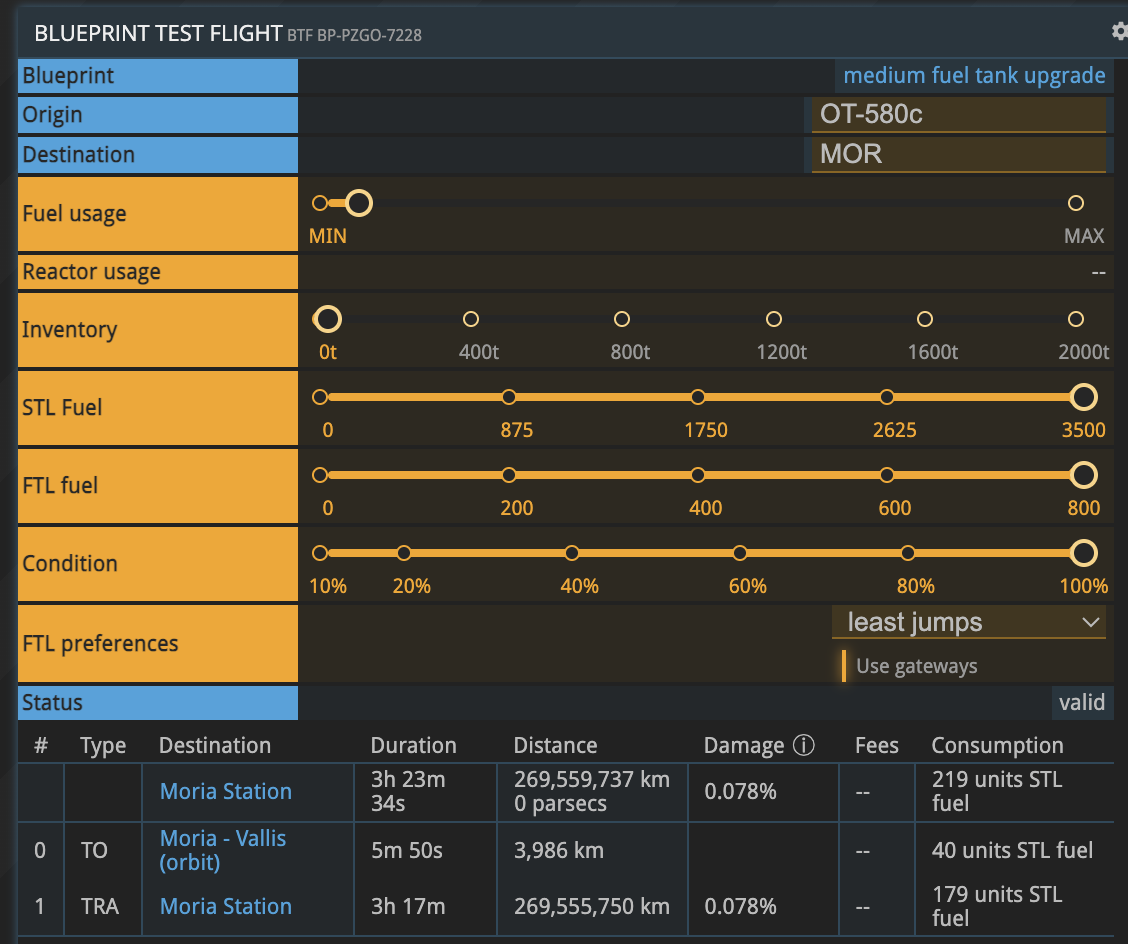
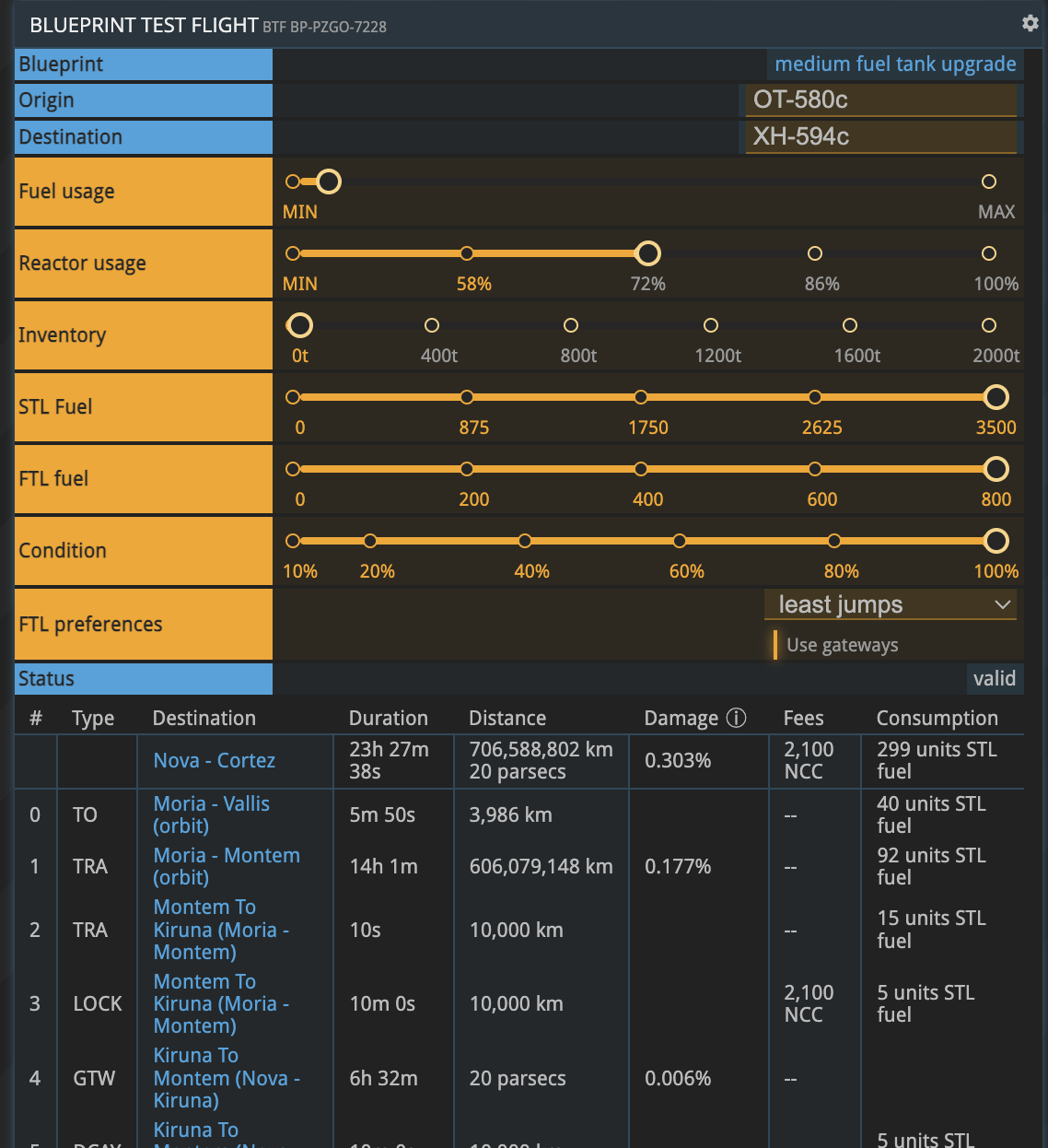
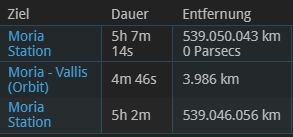
The problem with these flights is the STL time, MOR/Vallis to Cortez for example means that you need to fly from the start point to Montem, take the gate to Kiruna, and then fly from Kiruna to Cortez.
So you have two not very nice STL parts which are a whole different topic than the FTL part this post is about.
And regarding your “realistic” STL flight, lets do physics here:
you have a engine that burns 1 unit of fuel per set time with a constant accelleration
there would be air ressistance if your ships would fly through a atmosphere (and they also don’t have ground friction like wheels on cars) but luckily for space flights over 99% of the universe are a lot of nothing so there is no (decellerating) force aside from gravity.
Now here are two flights:
your engine burns in its optimal range for 1/4 of the flight to accellerate, drifts for 1/2 of the flight and deaccelerates on during the last 1/4
you have used x/2 fuel in each acceration phase so x fuel total
you drift for 1/2 of the time with speed v but the other 2x1/4 you have the average of v/2
with that you have the total average speed of 3/4 v using x fuel
your engine burns in its optimal range for 1/2 of the flight to accellerate, you don’t drift at all and deaccelerate during the last 1/2
you have used x fuel per accelerating phase so 2x total
you only accelerated to 2v and then directly deaccelerate so you have a average speed of v
you have traveled with v but have used 2x fuel
So the second trip was 33% faster as the first one but has used 2x the fuel with the same engine, cargo and ship.
Btw medium STL tanks add a bunch of weight and volume to the ship so if you don’t need to fly multiple flights without refueling I would recommend SSL over MSL.
Jump gate is not always the right choice if they are on onther side of star system.
Whatever you wanna count it, it makes no sense. If you move double mass it theoretically burns double energy. The cruising part should be theoretically same. Accelerating 1.4t diesel car burns 10l/100km, with 1t trailer…15l/100km, and cruises at 7l/100…40t lorry drinks 100l/100km, cruises at 40l.
Same logic applies to ships trying to beat gravity of planet, if you wanna add some realistic feel.
I did upgrade because I was fed up by constant fuelling, and hogging cargo bay by extra fuel :o) I was playing with various configurations, and various engines/jump drives make very little difference in real life
You are trying to compare a car to a plane, and that in space. There is no ground friction that is slowing the car down (proportional to v), there is no air ressistance that is slowing the car down (~v²), there is no engine running idle using fuel and slowing the car down as long as it is connected to the wheels. And on top of that combustion engines are rarely run at their optimal point, only at the “good” range (that is what a transmission is for).
In space the only force that is acting on the ship is gravity which can theoretically be used to accelerate the ship but the game only takes the gravity of the star and the speed of the planets into account but not the planets on the way so there is no “slingshot maneuver” (which isn’t easy to calculate, it is only a game so the math is already awesome).
No it isn’t because only a very small fraction of the flight (0,00074% for Vallis to MOR right now) are in atmosphere and near a planet. This means way over 99% of the flight are for away from planets where there is no atmosphere and their gravity is negligable compared to the sun.
And because it is in space you don’t have a directional change that costs you energy, you just accelerate, drift and deaccelerate. All in a curve according to the stars gravity.