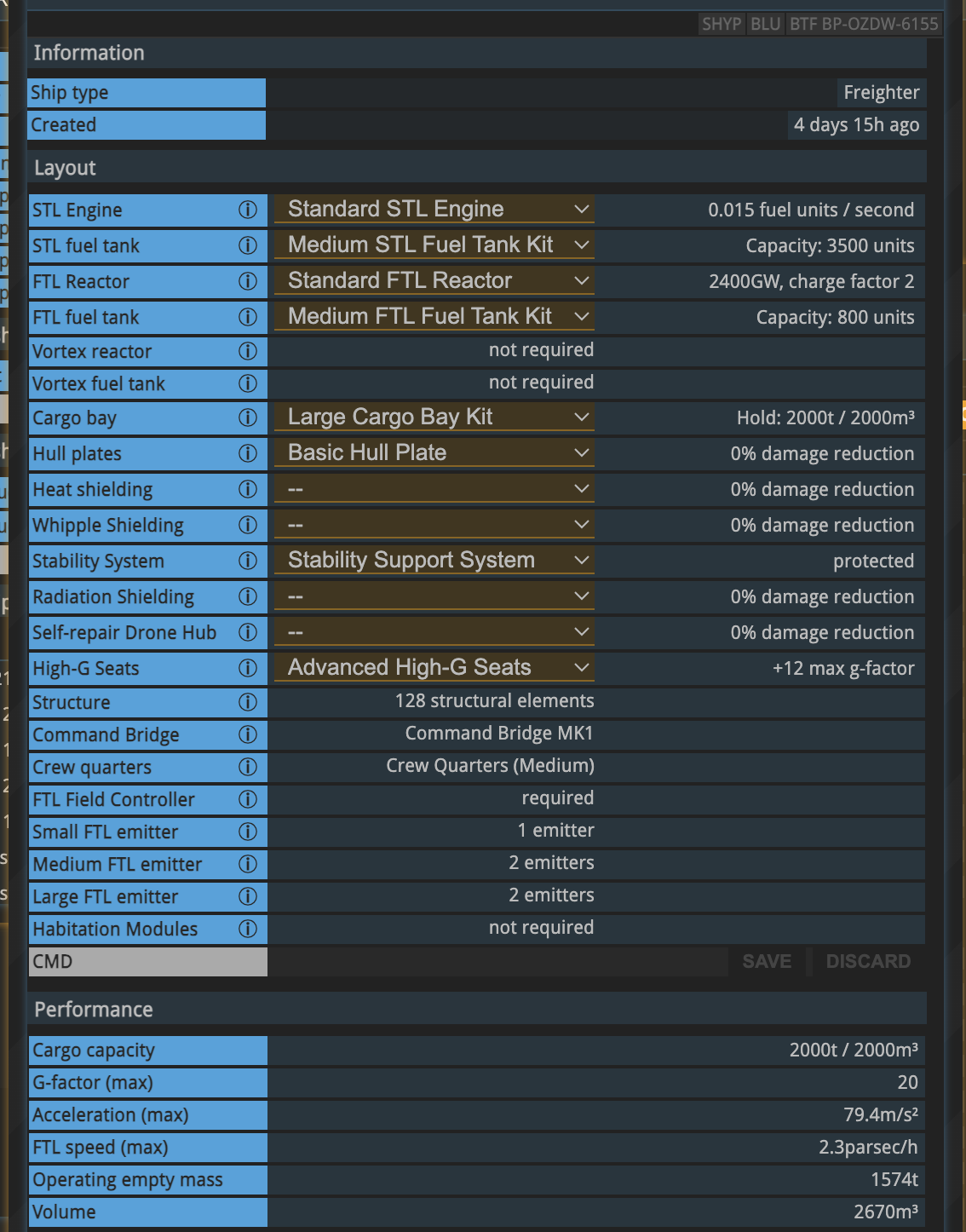
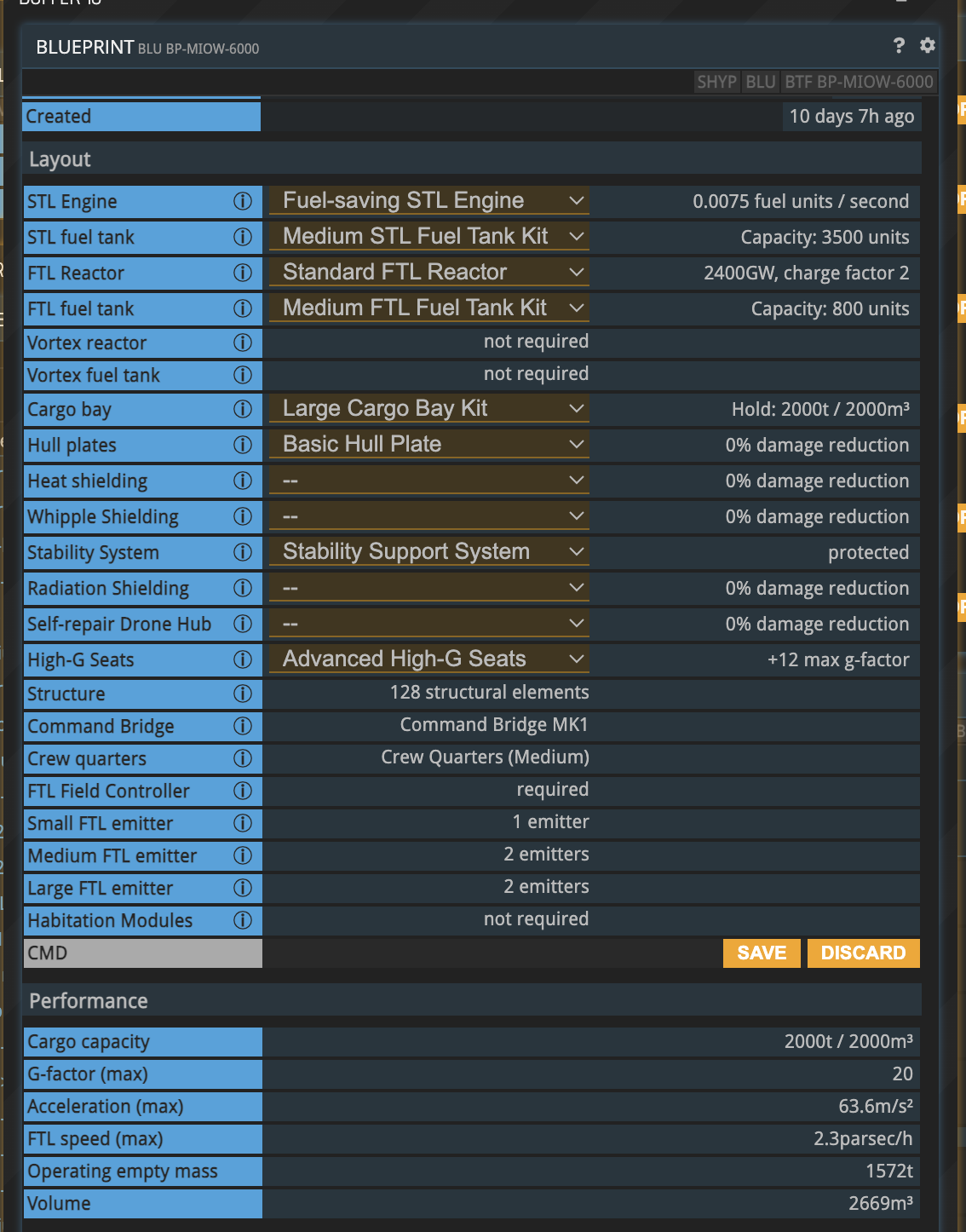
Standard STL engine has got higher max. acceleration, yet the fuel saving is faster. It makes no sense, or I do not understand the concept.
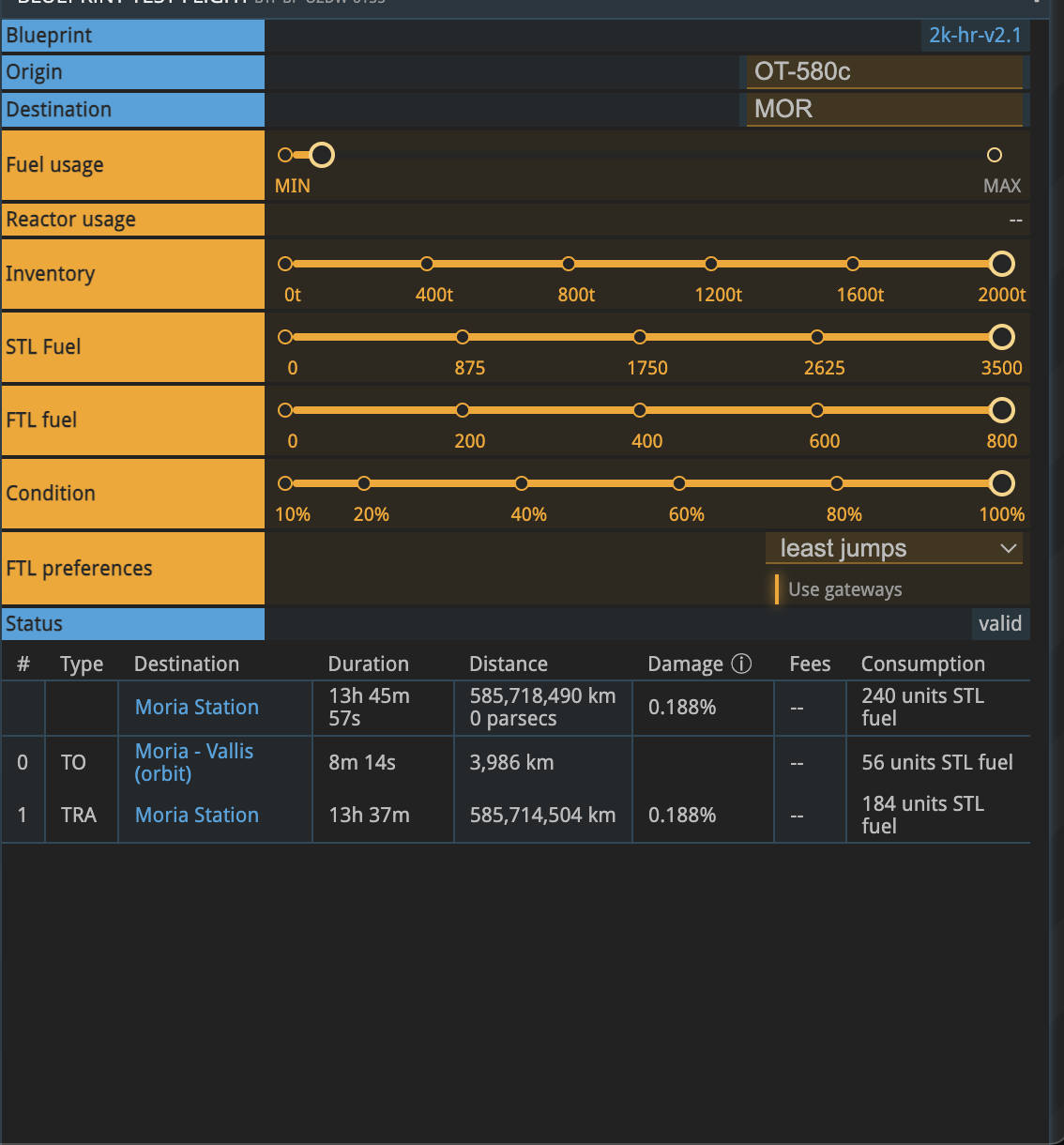
standard engine 13.5h @ 240 STL
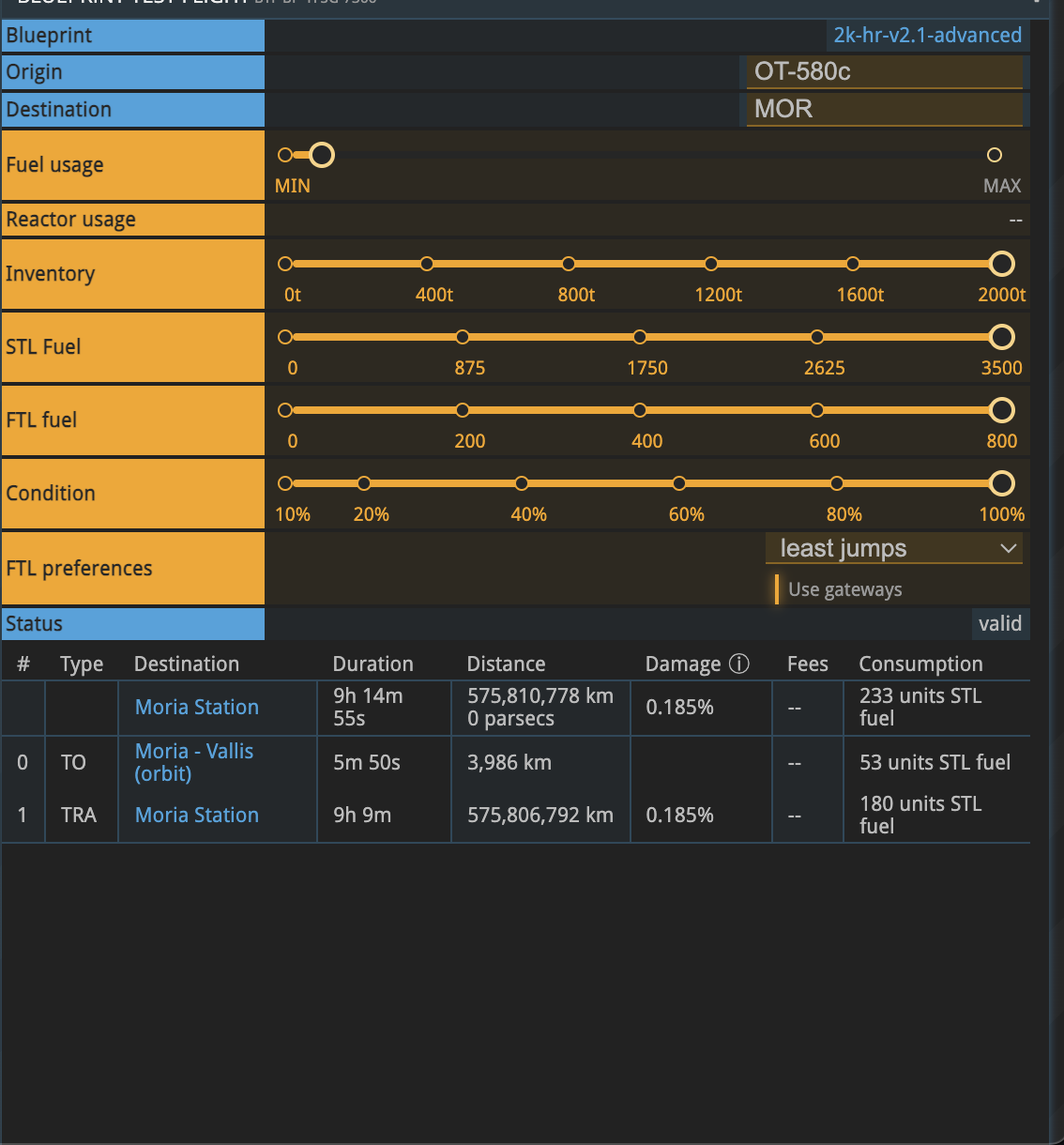
advanced engine 9h @ 233 STL
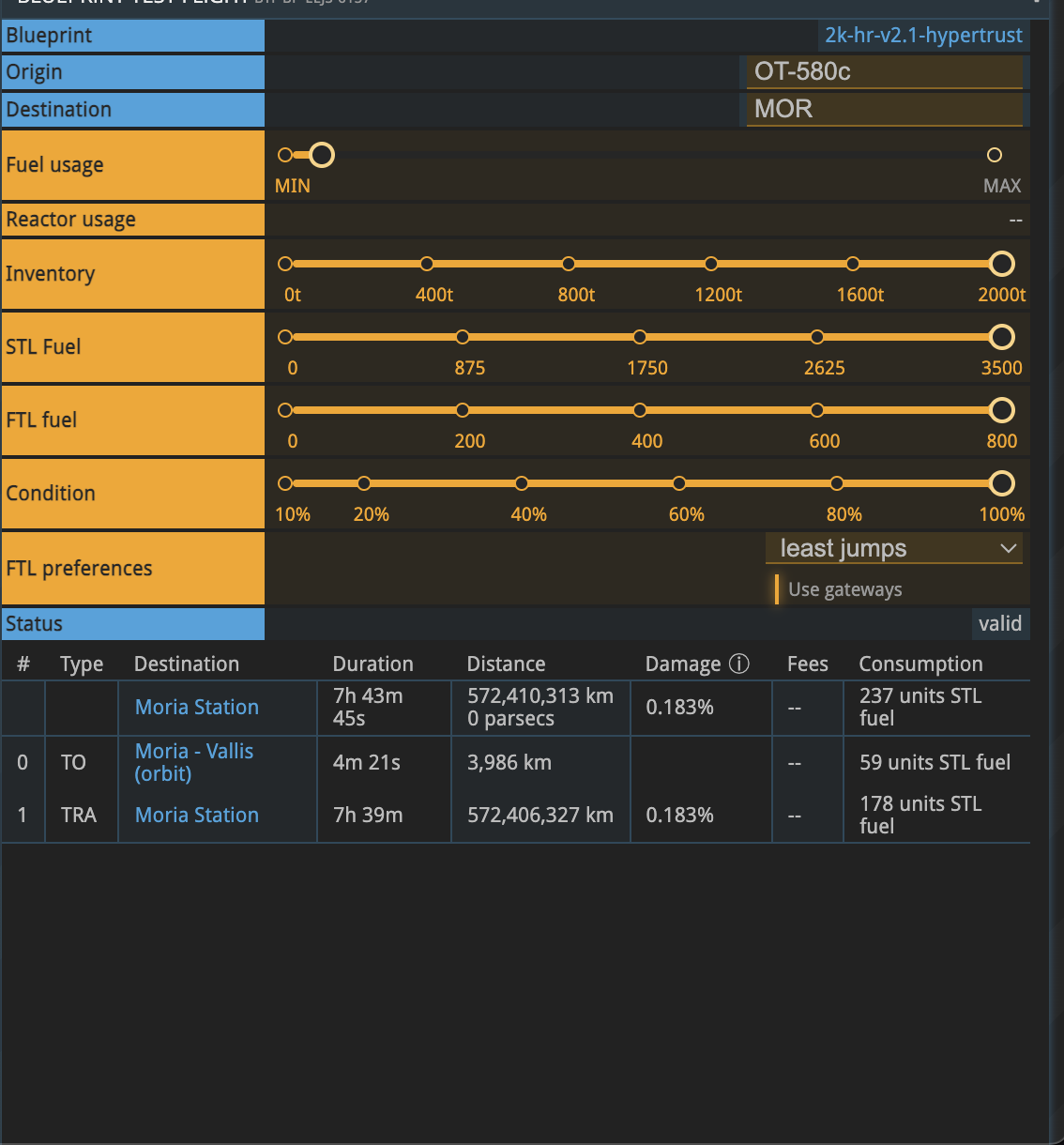
hypertrust, 196 m/s2, 7.5h @ 237 STL, 0.03 STL/s
advanced engine, 158m/s2, 9h @ 233 STL, 0.02 STL/s
standard engine, 79m/s2, 13.5h @ 240 STL, 0.015 STL/s
fuel saving, 63 m/s2, 11.5h @ 240 STL 0.0075 STL/s
Math makes no sense. It was discussed in another thread, and rocket “scientists” explained that moving different mass in space/gravity field makes very little difference ROFL
I am not theoretic, just use NI/common sense from above by example. Assuming everything is same config, except engines. The conclusion is:
- in real world high performance engine with highest torque/trust is faster, can accelerate faster, but is very thirsty.
- In real world of cars, which is basically same as in space if we forget drag/atmosphere for a moment. The more weight = more fuel use = slower acceleration. 1.4 tone 2.0TDi with 400Nm uses 8l/100km, with acceleration 8s/100km/h, and 25l/100km during acceleration. 40t lorry Scania V8 16.0TDi with 31l/100km/h, and full load 111l/100km, 30s to 100km/h
- there is very little difference between fully loaded ship, or empty travel, despite the ship weights double. Once, again “scientists” claimed it makes very little difference ROFL It might be what Albert Einstein used to say “What works in theory, doesn’t work in reality. And vice versa.” My ship weights 1600t empty, and fully loaded 3600t, yet the fuel consumption is basically same. Weird ha?
 It looks like it has got some anti-physical-laws countermeasures or I do not no, because game dynamics is unknown.
 - Without being rocket engineer/astronaut, but manufacturing/design/asembly guy in real world with 30+ years real experience - I am pretty sure, it can’t be same time/fuel consumption with double weight of object if we once again forget drag/atmosphere
Let’s get atmospherical
According to commonly agreed upon physical theories “There is no atmosphere in space, and with zero drag, and gravity. Object set in motion remains in motion, no matter the weight.”
In real world on Earth it is basically same if we forget the drag. Cruising fuel consumption is constant of flat surface. Which makes me wonder in our virtual space.
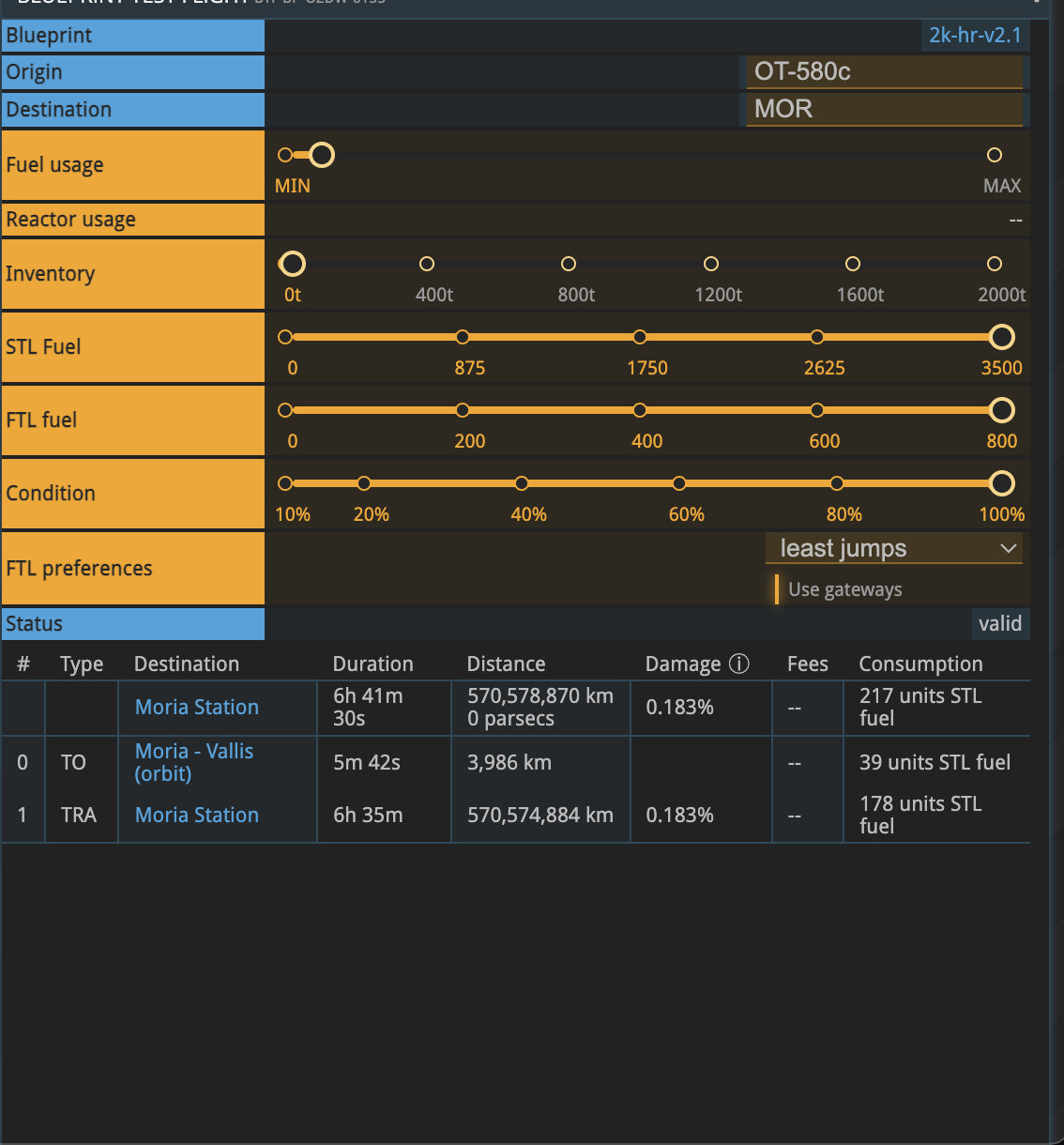
standard engine no cargo
same setup, but 2k tonnes cargo. If I understood rocket science theory, combined with some reality check. The acceleration phase is clear, it takes longer to accelerate more than double weight of object/ship. BUT the object set in motion, tends to stay in motion.
”In space, with no air resistance, a rocket will keep accelerating as long as thrust is applied, limited only by fuel and relativity.”
Why is ship in space with zero gravity/drag:
- travel double time if fully loaded
- why it even burns fuel if there is almost zero resistance in space
Reality check
Let’s say base <> orbit is acceleration phase 3986km long. Since there are no exact engine parameters such as thrust, exhaust gas velocity/travel speed (rocketry theory), thrust/fuel ratio, it is just a simple calculation because we know only mass, exact fuel consumption & max acceleration.
”Acceleration (m/s²) is a measure of how quickly velocity changes over time. It is calculated as force divided by mass (a = F/m).”
HyperTrust, 196 m/s2, 0.03 STL/s, 4:21 to orbit, 59 STL
Advanced Engine, 158m/s2, 0.02 STL/s, 5:50 to orbit, 53 STL
Standard Engine, 79m/s2, 0.015 STL/s, 8:14 to orbit, 56 STL
Fuel Saving, 63 m/s2, 0.0075 STL/s, 9:13 to orbit, 32 STL
HT = 261s * 0.03 STL = 7.83 STL fuel used during the flight to orbit vs 59 STL in game
AE = 350s * 0.02 = 7 vs 53 STL
SE = 494s * 0.015 = 7.41 vs 56 STL
FE = 540s * 0.0075 = 4.05 vs 32 STL
Travel time theory
We know no thrust, nor travel speed of engine in m/s. Let’s say acceleration is max travel speed, which is obviously nonsense. Car with max. speed 200km/h, doesn’t accelerate 200km/h.
HyperTrust, 196 m/s2 with travel time 261s = 51’156m travelled vs 3’986’000m to orbit
Advanced Engine, 158m/s2 @ 350s = 55’300m
Standard Engine, 79m/s2 @ 494s = 39’026m
Fuel Saving, 63 m/s2 @ 540s = 34’020m
Or reverse engineering of max acceleration for HT:
a = F/m
196 m/s2 = F/1’600’000
F = ~313’600’000 N or 313 MN vs the legendary Rocketdyne F-1 with vacuum thrust 7.8 MN