Shield & Hullplate Feedback

Since returning to PrUn, I have looked into changes made to hull plates which includes mitigation modifiers to shields (reduces the amount of hull plates needed to repair). I also released a Ship Repair Calc. spreadsheet which can assist players with designing & upgrading ships with various modules. I would like to bring up several observations regarding ship design and modules from the ship rebalance. Specifically:

  • Shield Mitigation
  • Hull Plate Variation

Shield Mitigation
With shields reducing hull plate repair costs, shields and expensive hull plates have become a viable late-game option. Despite the high up-front costs, ships with these modules boast extreme durability and only need to be repaired once or twice a year. Demand and availability for these modules seem to be growing as awareness increases.
Compared to advanced shields which block 100% damage of a specific type, or 70% in the case of Specialized Anti-Rad Plate (SRP), there remains little reason to use basic shields even when those are produced at half the cost of advanced shields. Using the Ship Repair Calc, basic shields (meteor, heat, & rad.) typically increase costs unless a ship is flying a very hazardous route. STL-only ships that fly limited routes seem to be where players are most willing to add shields to counteract specific hazards (usually micro-meteorites).
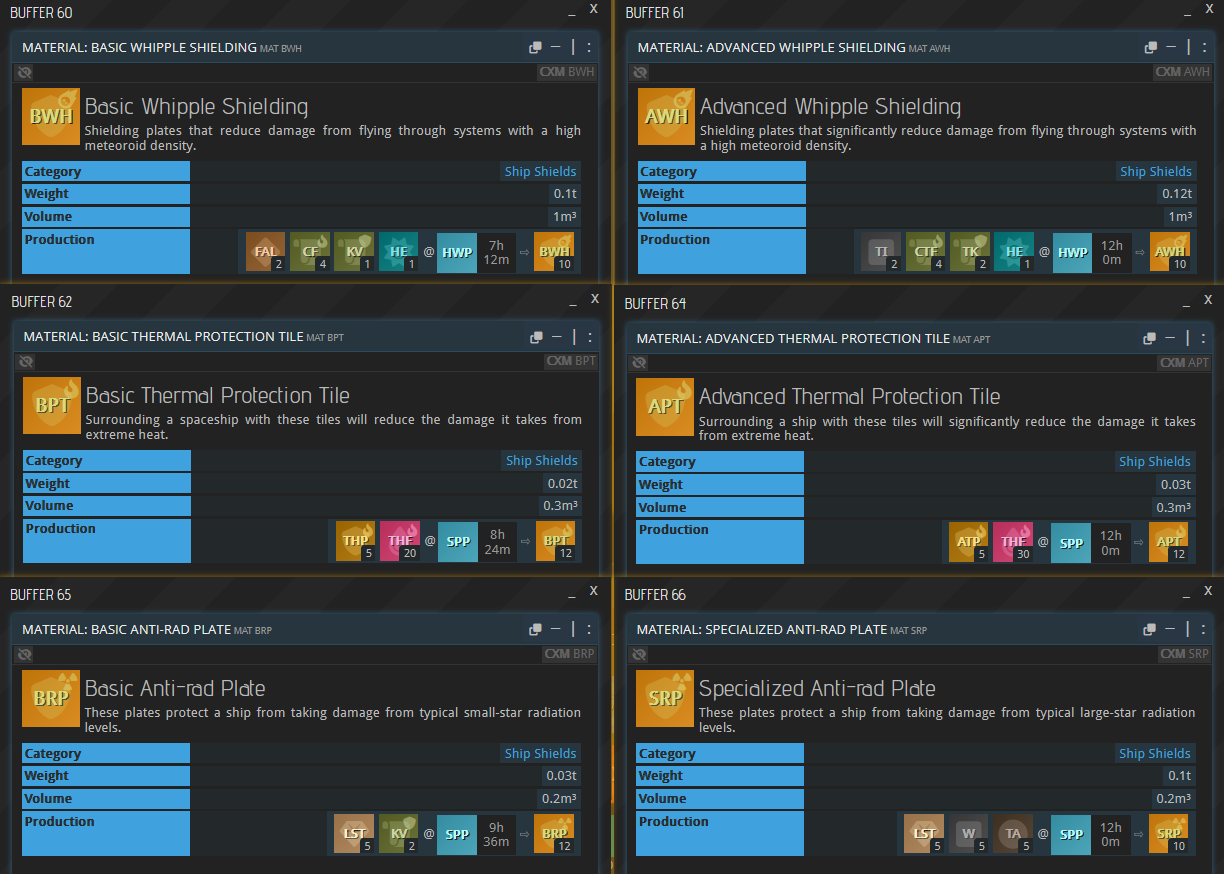
The opportunities for basic shields to be worthwhile are limited and they just seem to be there as a stop-gap until players can make advanced shields. Advanced shields should outperform basic shields but not to a point where basic types are overshadowed.

Hull Plate Variation

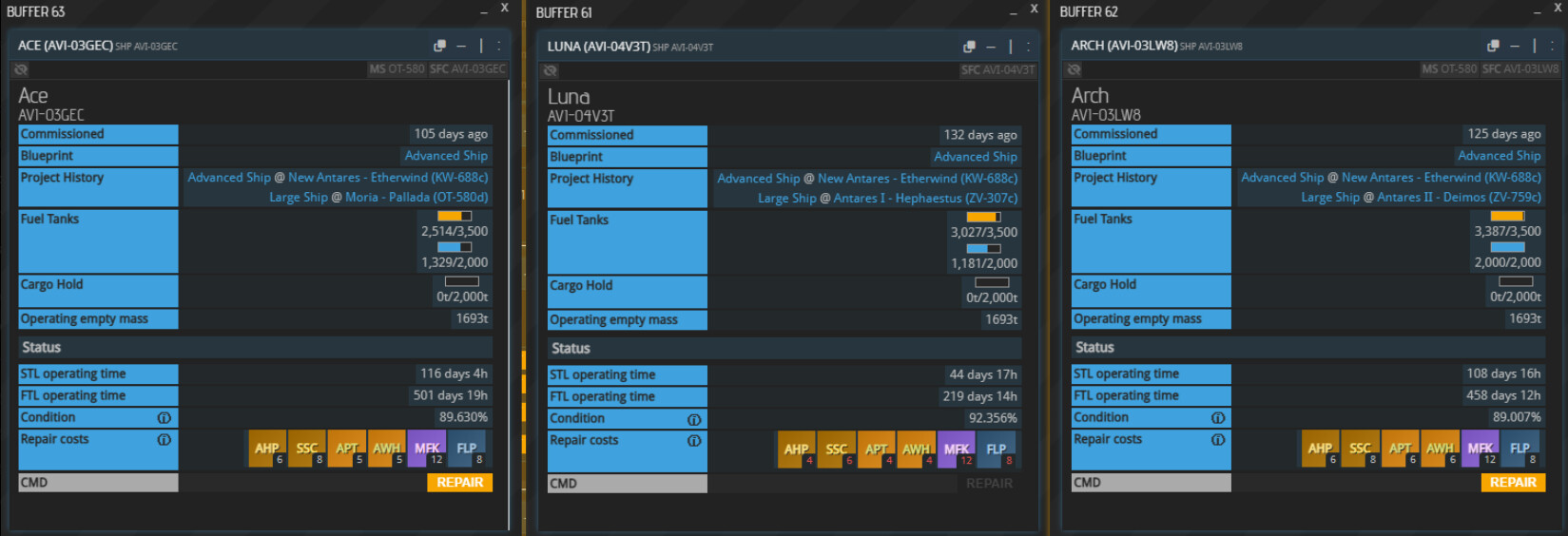
Shield mitigation has increased the viability of flying ships with expensive hull plates. However, Reinforced Hull Plates (RHP) and Hardened Hull Plates (HHP) are hardly ever produced because they are overshadowed by Advanced Hull Plates (AHP). AHPs are better than RHP & HHP in damage reduction and maximum G-forces for the same mass & volume ratio. Alternatively, Lightweight Hull Plates (LHP) and Basic Hull Plates (BHP) out-compete RHP & HHPs in price & availability.
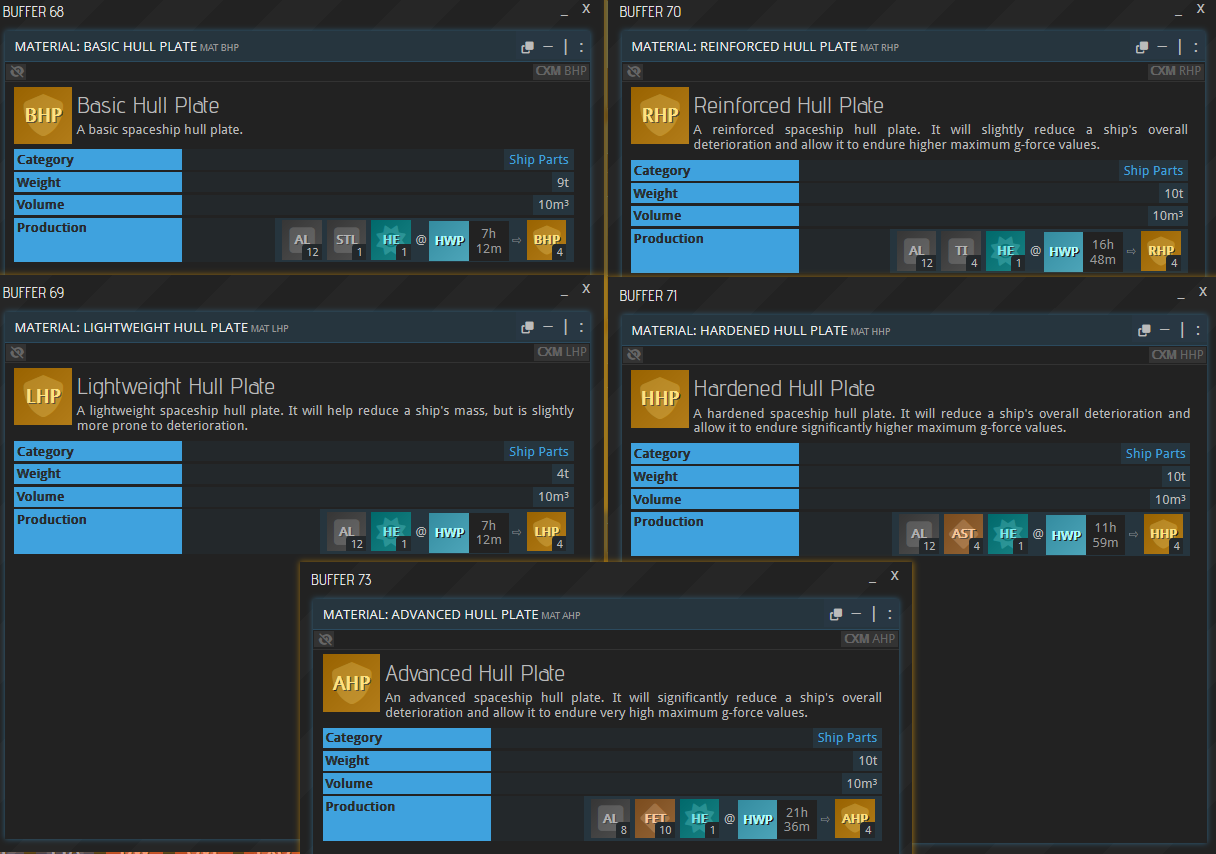
I would like hull plates to become more specialized with each offering unique tradeoffs.This could help establish a niche for each plate type in different categories (volume, mass, damage reduction, and/or G-forces) in addition to an economy to support them.

For example: HHP could be changed to 14t / 0.5m^3 while retaining part of the damage reduction. This type of hull plate would help increase a ship’s FTL capabilities by decreasing emitter size and increasing parsec/hour while reducing STL capabilities with its higher mass.

Design choices such as these could shake-up how ships are built and give players additional options. The current decision is a no-brainier and boils down to either LHPs or AHPs by the late-game since the mass/volume numbers for RHP/HHP/AHP are the same.

Overall, I believe ship design and ship modules are in a better state and interest has developed for high-end shields and AHPs. If mid-tier plates and shields are intended to be a stop-gap product than they are well-positioned.

I’d really like to hear what other community members have to say about current ship design & modules!
9 Likes

I did some investigation on shields with napkin math to see if they were worth using

  • Whipple shielding was generally a little under break-even for general purpose flights.
  • Thermal shielding is sometimes very helpful for specific planets, decreasing damage by >.2%, otherwise it’s generally not worth
  • Rad shielding, like thermal shielding, was sometimes useful for certain systems, but generally not.
  • I could never find a planet where G-seats mattered

I think a quick hack would be to require one shield per two hull plates so that the benefit per cost of all shielding was instantly doubled. Another one could be to make every ship repair take a minimum of 24h so that repairing half as often, for example, would save a few percent on ship capital costs. RHP and HHP could probably just be removed from the game as we already have enough combinations of ship shielding and plating. Perhaps RHP and HHP could instead be combined into one type of hull plate (still called RHP) that is used as in ingredient to AHP so that there is at least a market for RHP.

A better way to make shields more useful would be to totally redesign the map so that systems at the fringes of the galaxy are far more resource-rich but also more perilous to traverse. You could combine this approach with other financial incentives to settle the outer sectors. But this would probably require a total reboot of the game.

1 Like

just quick math tells me it is waste of resources. Advanced plates/shields are expensive, lack proper supply.

It is better to simply repair what is easily available. I have one base where each visit is 1-2% damage due some natural phenomens…no idea, I do not know how to see space anomalies.

Radiation and micrometeoroids are visible on SYSI, pressure is visible on SYSI and PLI. The damage from all three has now largely been calculated.

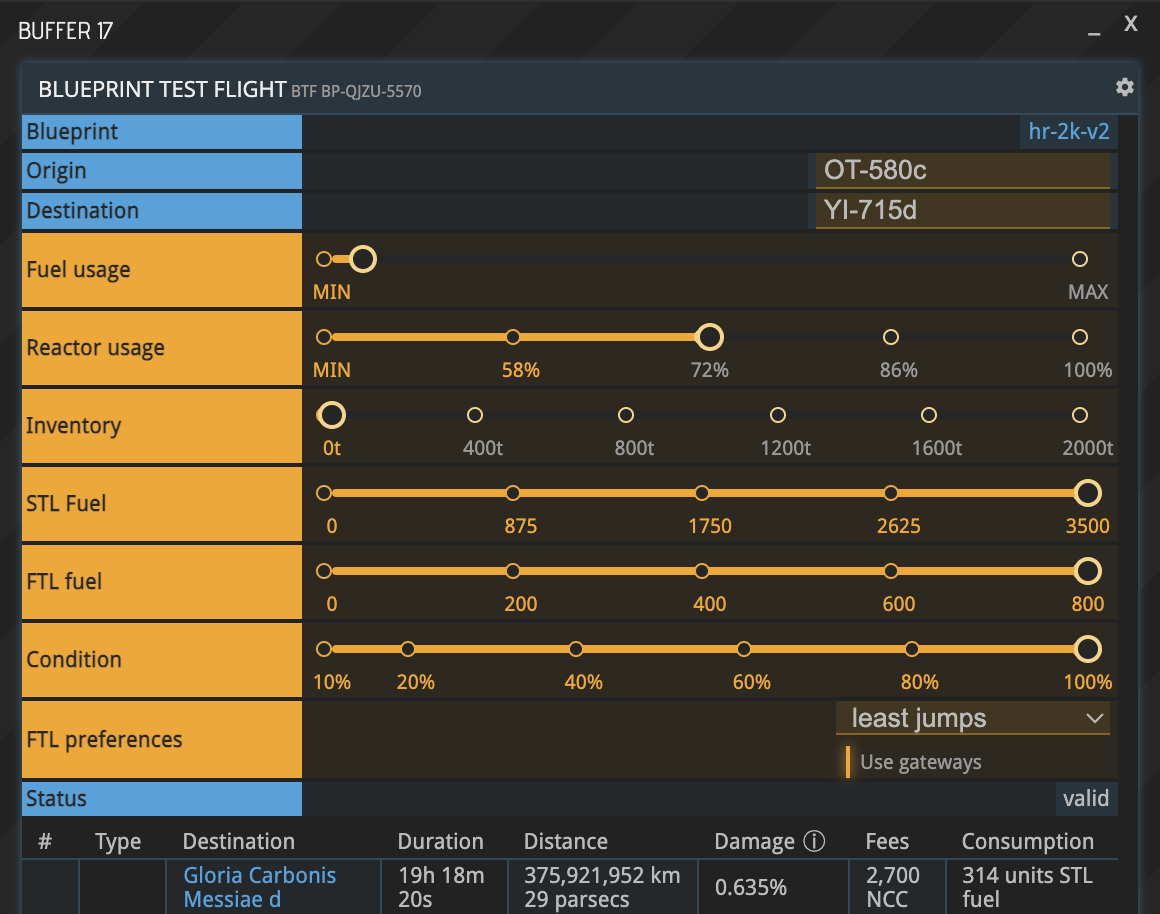
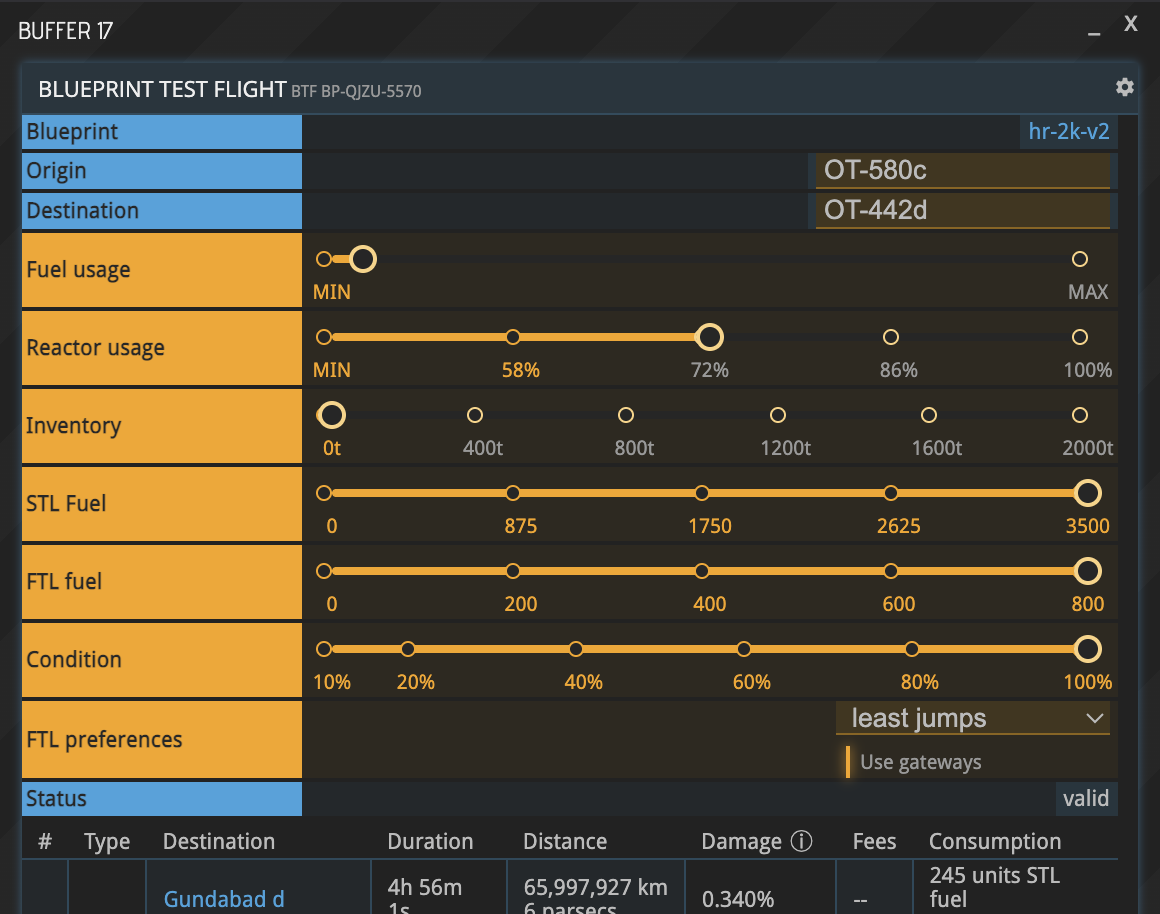
that is weird. I have two similar planets…yet one does 0.5% damage, and the other 0.34%.

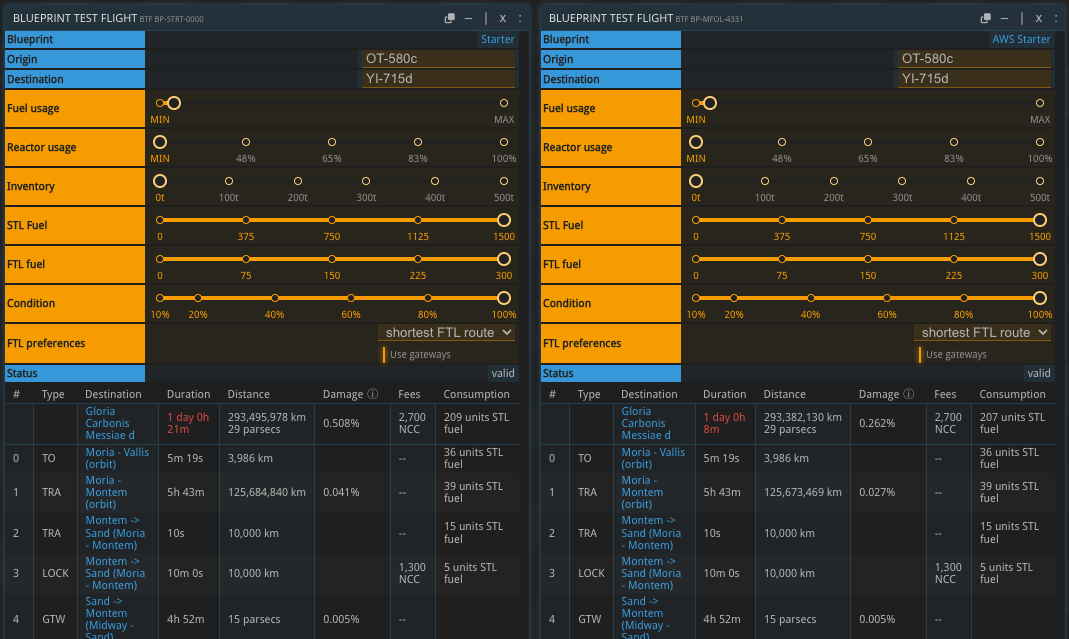
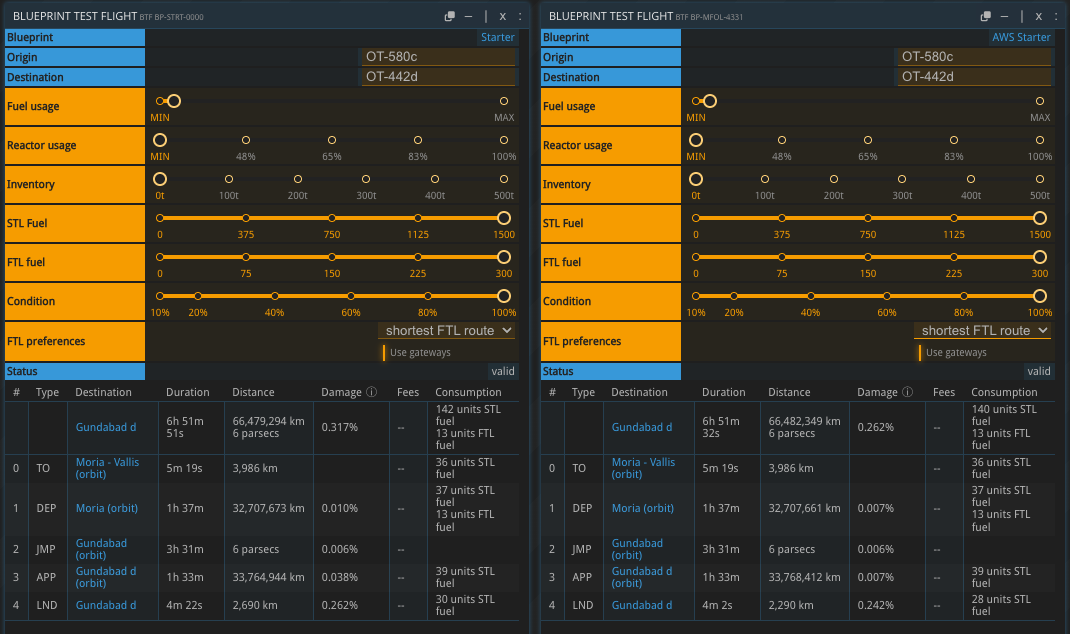
https://rest.fnar.net/systemstars/star/YI-715 “MeteoroidDensity”: 2.575532818279298
https://rest.fnar.net/systemstars/star/OT-442 “MeteoroidDensity”: 1.874236911367317

That ratio is in line with the damage you describe. From wolfram: (2.575532818279298 / 1.874236911367317) / (0.5 / 0.34) = 0.93 which is pretty close to 1.

I have noticed meteor density, but it is a number for whole system. Other planets in system have just 0.1% damage for example. It doesn’t say where exactly meteorites are.

Meteoroids are a property of the system (https://rest.fnar.net/systemstars/star/YI-715) not the planet (https://rest.fnar.net/planet/YI-715d). Damage from the meteoroids accumulates during in system transit in the system.

If you add advanced whipple shields (reduces meteoroid damage 100%), the damage for the AWS ship is identical on both routes.


tried once, basic plates are cheaper to repair than expensive shields :wink:

The question isn’t so much “which is cheaper to repair” but rather “what is the price per transit”?

In the first post, there’s a link to Ship Repair Calc. spreadsheet - if you select the route of YI-705b to YI-705d you’ll see that the AWH ship has a repair transit cost of $44 while the other ships are $661 and $670.

This is one thing if you’re dealing with a couple in system ships that go between inner planets and always have a short route (Circa to Circe for example) and are willing to let it get to 10% because it doesn’t impact performance too much in that situation.

One can, however, debate if the Antares - Harmonia route is worth it with a repair cost for the AWH ship of $320 vs $476 and $482 - the $150 savings per trip would take a while to pay off.

Nonetheless, the route difference between the that you were describing earlier of 0.5% vs 0.34% can be attributed to meterorid damage.

I am more interested in ROIC.

AWH in Moria is scarce stuff, currently at 30k NCC. 94 x 30k = 2.82M NCC extra.

According to above by mentioned calculator. I can do 100 trips with basic platting, or 300 trips with AWH. Thus, I can do 3x more trips for 1.67x higher repair costs, and initial 2.82M investment.

I can do 3800 trips till I waste the 2.82M NCC. With local trips 2-8h, I can do 3-12 trips per day. 1-3.5 years of flying.

It is weird shields get damaged, they usually recharge in cyber-punk sci-fi world.

The whiffle shield is something that is consumed / damaged as its used. It’s not cyberpunk energy shield…

The Whipple Shield is the first spacecraft shield ever implemented. It was introduced by Fred Whipple back in the 1940s, and is still in use today.

Note the use of TK and KV in the materials.

The Stuffed Whipple Shield is a variation of the simple Whipple Shield. Layers of Nextel and Kevlar are inserted in between the bumper and rearwall. These additional layers further shock and pulverize the debris cloud such that any fragments reaching the rearwall are benign.

1 Like

It should be at around 20k, maybe a bit higher. It got bought out a bit ago though

that is my point ROIC, and availability. BHP are always there, or you can even manufacture them :wink: Very few manufacture exotic stuff, and it costs simply too much if you get it.

And partially why people don’t make the exotic stuff is the demand is low and it sits there forever. This is why I support the idea of MM for almost all advanced products. I make a fair number of expensive units and I sell the excess not need in my ships and sometimes there is no market for it - then I am stuck with an expensive component but not way to turn it into cash. Discourages me from having much excess at all.

There’s a bit of feedback on this. I’ve not used AWH on ships because of the difficulty finding it. That in turn means that there’s less demand for it, so people don’t make it because having it as inventory means that’s credits tied up that can’t be used for other things. … And that means that its harder to find it so people don’t use it for ships.

I had mine ssitting on the CX for weeks if not months and they didn’t sell but now somebody bought a lot (maybe to upgrade the whole fleet) but I already have materials for a few hundreds on the way

1 Like

You can always put up a buy order on the CX - that signals to makers that someone is ready to buy it. That is probably the better way to do it - while you would just tie up cash, for the maker there is alot more involved to make something and stick it on the market with no real idea if it will move. As SLKLS says later he had them on the market and no one was buying them.

2 Likes